


There is a particular kind of quiet that settles over a home in the weeks after a baby arrives. The days blur into a soft loop of feeding, soothing, dozing, and falling helplessly in love with a tiny person who did not exist in your arms a short while ago. In the middle of all that tenderness and exhaustion, a very ordinary question often surfaces, usually when you least expect it: When will my period come back?
It is a question almost no one talks about out loud, and yet nearly every new mother eventually asks it. Maybe you are wondering because you want another baby soon. Maybe you are wondering because you very much do not. Maybe you simply want your body to feel like yours again, predictable and familiar, after nine months of pregnancy and the seismic event of birth. Whatever your reason, you deserve a clear, calm, honest answer.
A new mother tenderly holding her newborn
The truthful answer is that the return of your cycle after baby is one of the most variable, individual things your body will ever do. There is a wide, perfectly normal range, and where you fall in it depends on your hormones, your feeding choices, your sleep, your stress, and a dozen other things you cannot fully control. This guide is here to walk you through all of it: what actually happens to your cycle during pregnancy and right after birth, when periods typically return, how breastfeeding changes the timeline, the surprising fact that fertility can sneak back before your first period, what those early postpartum periods are really like, the emotional weather that comes with all these hormone shifts, and why tracking your cycle in this season matters more than people realize.
This is general educational information written to inform and reassure you, not personal medical advice. Your doctor, midwife, or lactation consultant knows your specific history and is your best resource for decisions about your own body. With that said, let’s begin where every postpartum cycle story begins: with the remarkable thing your body did while you were pregnant.
What Happens to Your Cycle During Pregnancy
To understand the return of your period, it helps to remember why it disappeared in the first place. In a typical menstrual cycle, your body prepares the lining of the uterus, the endometrium, for a possible pregnancy each month. If no pregnancy occurs, hormone levels fall, the lining sheds, and you have a period. That shedding is the bleeding you recognize as menstruation.
When you become pregnant, that monthly cycle goes on pause. Instead of building up and shedding the uterine lining on a roughly monthly rhythm, your body holds onto that lining to nourish and protect the growing pregnancy. Hormones like progesterone and human chorionic gonadotropin (hCG) rise dramatically and signal your ovaries to stop releasing eggs. Ovulation stops. Without ovulation and without the usual hormonal rise and fall, there is no period. This is why a missed period is so often the first clue that someone is pregnant.
For roughly forty weeks, your reproductive system is doing an entirely different job. It is no longer running its monthly maintenance cycle; it is sustaining and growing a new life. The absence of your period during pregnancy is not a malfunction. It is your body doing exactly what it should, redirecting all of that hormonal energy toward the pregnancy.
Then your baby is born, and the whole hormonal landscape changes again, almost overnight. The placenta, which has been a powerful hormone-producing organ throughout pregnancy, leaves your body during delivery. With it goes a huge source of the hormones that maintained the pregnancy. Levels of estrogen and progesterone plummet within hours and days. This sudden, dramatic hormonal drop is one of the most significant biological shifts a human body can experience, and it sets the stage for everything that follows: the bleeding of recovery, the establishment of milk supply, the emotional turbulence many mothers feel, and eventually, the slow reawakening of your menstrual cycle.
Understanding this gives you a useful frame. Your cycle did not simply switch off and on like a light. It was suspended for a profound reason, and now it has to be rebuilt, gradually and on its own schedule. Patience is not just a virtue here; it is biologically appropriate.
Lochia Versus a Real Period: Why the First Bleeding Is Not Menstruation
Here is one of the most common and understandable points of confusion for new mothers. In the days and weeks right after birth, you will bleed, sometimes heavily. It is tempting to think, “Well, that was fast, my period is already back.” But that early bleeding is almost never a true period. It has its own name: lochia.
Lochia is the discharge your body produces as your uterus heals and shrinks back toward its pre-pregnancy size. After your baby and placenta are delivered, the site where the placenta was attached to the uterine wall needs to heal, and the extra blood, tissue, and lining built up during pregnancy needs to clear out. Lochia is that clearing-out process. It happens whether you delivered vaginally or by cesarean, because every birth leaves the uterus with healing to do.
Lochia typically follows a recognizable pattern over several weeks:
- The first few days (lochia rubra): The bleeding is usually bright or dark red and relatively heavy, sometimes with small clots. This is the most intense phase, and it is normal to soak through maternity pads more quickly in these early days.
- Roughly the second week (lochia serosa): The flow lightens and the color shifts toward pink or brownish. The amount tapers noticeably.
- The following weeks (lochia alba): The discharge becomes yellowish-white or creamy and continues to diminish, often lasting until somewhere around four to six weeks postpartum, though the exact timeline varies from person to person.
A few things are worth knowing about lochia. It tends to be heavier when you stand up after lying down, because gravity helps gravity does its work. It can briefly increase with activity, which is your body’s gentle reminder to rest. And it has a distinct, slightly musty smell that is normal; a foul or strong odor, however, can signal infection and is worth a call to your provider.
The key difference between lochia and a real period is what is driving the bleeding. Lochia is the bleeding of healing, the resolution of pregnancy and birth. A true menstrual period is the bleeding of a cycle, the result of your ovaries resuming their work, ovulation occurring (or your body attempting it), and the uterine lining building up and shedding once again. Lochia comes first and is universal. A true period comes later, on a timeline that is wildly individual.
One more practical note: most providers ask you to avoid tampons and to hold off on penetrative sex until lochia has stopped and you have had your postpartum check-up, usually around six weeks, to give your body time to heal and to reduce infection risk. So if you are seeing bleeding in those first weeks, it is recovery, not your cycle returning. Your real period is still waiting in the wings.
When Does Your Period Actually Return? The Huge, Normal Range
This is the headline question, and the honest answer can be summarized in one liberating sentence: the normal range is enormous. Some women see their period return as early as around six weeks after birth. Others do not menstruate again for a year or even longer. Both ends of that spectrum, and everything in between, can be completely normal.
The single biggest factor determining where you land is whether and how much you are breastfeeding. We will spend real time on that in the next section because it deserves it. But to give you a working mental model, here is the general landscape:
If you are not breastfeeding at all (formula feeding from the start): Your period often returns relatively early, frequently somewhere in the range of about six to twelve weeks after birth, though for some it takes a little longer. Without the hormonal influence of breastfeeding, your body tends to resume its cycle sooner.
If you are exclusively breastfeeding: Your period may stay away for many months. Some exclusively nursing mothers do not see a period until they begin weaning or until their baby starts taking other foods and nursing less often. A return anywhere from several months to a year or more can be normal in this group.
If you are combination feeding (some breast, some formula or solids): You land somewhere in the middle, and the timing depends heavily on how often and how much your baby nurses directly at the breast.
Notice the word “range” keeps appearing. That is intentional. There is no single correct date for your period to come back, and comparing yourself to a friend whose cycle returned at eight weeks while yours has not shown up at eight months is rarely useful, especially if your feeding situations differ. Two healthy mothers can have timelines that are six months or more apart and both be entirely normal.
A few other factors can nudge the timeline, though usually less powerfully than breastfeeding:
- Your individual hormonal makeup. Some bodies simply restart their cycle faster than others, just as some women have always had different cycle patterns.
- Sleep and stress. The profound sleep deprivation and stress of new parenthood can influence the hormonal signals that drive ovulation, sometimes delaying things.
- Body weight and nutrition. Significant changes in nutrition or body composition can play a role in how quickly cycles resume.
- Certain health conditions. Thyroid issues, polycystic ovary syndrome, and other conditions can affect cycle return, which is part of why tracking and a postpartum check-up matter.
The most important takeaway is this: a wide range is normal, and the absence of your period in the early months, especially while breastfeeding, is usually a sign that your body is working exactly as designed, not a sign that something is wrong. That said, if you are not breastfeeding and several months pass with no period, or if anything feels off to you, it is always reasonable to check in with your provider. Trusting the range does not mean ignoring your instincts.
A resource like vyvecare can help you make sense of where you fall within this range by gently logging the days and patterns as your body finds its rhythm again, so that “Is this normal?” becomes a question you can actually look at with data rather than worry about in the dark.
How Breastfeeding Delays Ovulation: Lactational Amenorrhea Explained
If breastfeeding is the biggest lever on when your period returns, it is worth understanding why. The mechanism has a name that sounds more intimidating than it is: lactational amenorrhea. Broken down, it simply means the absence of menstruation (“amenorrhea”) caused by breastfeeding (“lactational”). It is your body’s natural, ancient way of spacing pregnancies so that you can devote your resources to the baby you already have.
Here is the basic biology, kept friendly. When your baby suckles at the breast, that stimulation sends signals to your brain. In response, your body releases the hormone prolactin, which is essential for milk production. Prolactin has a side effect that is central to our story: it suppresses the hormones that drive ovulation. Specifically, high prolactin levels interfere with the normal pulsing release of the hormones (GnRH, and downstream of it LH and FSH) that your ovaries need in order to mature and release an egg. No ovulation, no menstrual cycle, no period.
The crucial detail is that this suppression depends on frequent, consistent nursing. The signal is strongest when your baby is breastfeeding often, around the clock, including at night, with no long gaps. Every nursing session is, in a sense, a fresh signal telling your body, “Not yet, we are still feeding a baby.” This is why the timing and frequency of feeds matter so much, not just the fact that you are breastfeeding at all.
This natural birth-spacing effect is sometimes formalized into something called the lactational amenorrhea method (LAM), which some families use as a temporary, natural form of family planning in the early months. For LAM to be at its most reliable, a fairly strict set of conditions generally needs to be met all at once: your baby is under six months old, you are exclusively (or nearly exclusively) breastfeeding on demand day and night without long gaps, and your period has not yet returned. When all three of those hold true, the natural contraceptive effect is at its strongest. But, and this is a big but, the moment any of those conditions slips, the protection weakens, sometimes faster than mothers expect.
That brings us to the most important caveat of this entire guide, important enough to deserve its own section.
The Surprising Truth: You Can Ovulate Before Your First Postpartum Period
If you remember one fact from this article, let it be this one: you can become fertile again before you ever see a postpartum period. Your first ovulation happens before the bleeding that would follow it. So the very first egg you release after having your baby could, in theory, be fertilized, meaning you could conceive again without ever having had a “warning” period in between.
This catches many new parents off guard, and it makes complete sense why. Most of us mentally treat the return of menstruation as the starting gun for fertility: “Once my period comes back, then I need to think about contraception.” But the cycle does not work that way. Ovulation comes first; menstruation is what happens roughly two weeks later if that egg is not fertilized. So your body can quietly resume releasing eggs while you are still in the period-free window, and you would have no obvious external signal that it had happened.
A mother checking her phone with her baby nearby

This is precisely why some families experience pregnancies spaced much closer together than they planned, sometimes affectionately (or exhaustedly) called “Irish twins” or simply a surprise second pregnancy. It is not that anyone did anything wrong. It is that fertility can return silently, ahead of the period that everyone is waiting to see.
A few practical implications flow from this:
- Do not rely on the absence of a period as a guarantee that you cannot conceive, especially as your baby gets older, starts sleeping longer stretches, begins solids, or nurses less often. As breastfeeding becomes less frequent, ovulation can return even though your period has not.
- If you want to avoid pregnancy, plan your contraception proactively, ideally before you become sexually active again postpartum, rather than waiting for your period to appear. We will talk more about contraception while breastfeeding in a later section, kept general, with the reminder that your provider can help you choose what fits your body and feeding plan.
- If you are hoping to conceive again, this same biology is good news: you may be fertile sooner than you assumed, and paying attention to your body’s signs can help you notice that window.
This is also one of the clearest reasons that postpartum cycle tracking is so valuable. When you are paying attention to subtle signs, changes in cervical mucus, a shift in basal body temperature, the return of premenstrual-type symptoms, you give yourself a fighting chance of noticing that fertility has returned before a surprise does. We will dig into tracking in detail soon. For now, simply hold onto the headline: ovulation can, and often does, come before your first postpartum period.
What Those First Postpartum Periods Are Often Like
Let’s say enough time has passed, and one day, there it is: a real period, your cycle genuinely returning. Wonderful. Now brace yourself for a small plot twist. Your first few postpartum periods may not look or feel like the periods you remember. For many women, the early postpartum cycle is a season of irregularity and change, and knowing this in advance can save you a lot of needless worry.
Here is what is commonly reported, all within the range of normal:
Heavier flow. Many women find their first postpartum period is heavier than their pre-pregnancy periods, sometimes noticeably so. There can be more bleeding and sometimes more clotting, particularly in that first cycle. This often settles down over subsequent months as your body recalibrates.
Irregular timing. The interval between your first and second postpartum periods, and the ones after that, can be unpredictable for a while. You might have a period, then wait longer than expected for the next, or have them arrive closer together. Your cycle length may bounce around before it finds a steady rhythm again. This is your reproductive system essentially “rebooting” and re-finding its pattern.
Changes in cramps and symptoms. Some women find their cramps are different than before pregnancy, occasionally more intense, occasionally milder. Premenstrual symptoms, breast tenderness, mood shifts, and the overall character of your period can all feel slightly (or significantly) different from what you knew. For some lucky people, periods even become more manageable than they were before. Bodies are full of surprises.
The breastfeeding wobble. If you are nursing when your period returns, you may notice your cycle is irregular for longer, since the hormonal influence of breastfeeding is still in the mix. You might also notice temporary dips in your milk supply around your period, or some breast tenderness, both of which are common and usually resolve as the cycle passes.
Spotting and false starts. It is not unusual to have some spotting or a very light “almost period” before your cycles fully establish, especially while breastfeeding. Sometimes the body attempts to cycle, doesn’t quite complete the process, and tries again the next month.
Why all this variability? Because restarting a complex hormonal system is genuinely complex. Your ovaries, your brain’s hormonal command center, and your uterine lining all have to get back into coordinated communication, and that coordination takes a few cycles to dial in. Add breastfeeding hormones on top, plus sleep deprivation and stress, and a little chaos in the early months is entirely expected.
The reassuring news is that for most women, cycles gradually regularize over a few months once they begin, eventually settling into a pattern, which may be similar to your old one or may be a new normal for your post-baby body. The key word again is patience, paired with attention. And attention, conveniently, brings us to the reason tracking is so powerful in this exact season, because when everything is changing, having a record turns confusion into clarity.
The Emotional Side: Postpartum Hormones, Mood, and Your Cycle
We cannot talk honestly about the postpartum body without talking about the postpartum heart and mind. The same hormonal upheaval that governs your cycle’s return also profoundly affects your emotions, and the two are deeply intertwined. Acknowledging this is not a detour from the topic; it is central to it.
Remember that dramatic drop in estrogen and progesterone right after birth? That hormonal cliff is part of why so many mothers experience the “baby blues” in the first days and weeks: tearfulness, mood swings, irritability, feeling overwhelmed or weepy for no clear reason, anxiety that comes in waves. For many, these baby blues are temporary and ease within the first couple of weeks as hormones begin to find a new equilibrium. They are common and, on their own, usually not a cause for alarm.
It is important, though, to distinguish the transient baby blues from postpartum depression and postpartum anxiety, which are more persistent, more intense, and very much deserving of real support. If feelings of sadness, hopelessness, severe anxiety, intrusive thoughts, or detachment last beyond a couple of weeks, interfere with your ability to function or care for yourself or your baby, or simply feel like too much to carry, please reach out, to your provider, a mental health professional, or a trusted support line in your area. Postpartum mood conditions are common, they are not your fault, and they are treatable. Asking for help is a sign of strength and good mothering, not a failure of it.
Now layer the cycle on top. As your menstrual cycle returns, the natural monthly fluctuations of estrogen and progesterone come back too, and with them, the familiar premenstrual mood shifts many women experience: irritability, low mood, anxiety, or weepiness in the days before a period. For some mothers, these premenstrual mood changes feel more pronounced postpartum than they did before, particularly while the body is still recalibrating and while sleep is in short supply. You may notice that certain rough emotional days line up with a particular point in your cycle, a connection that is invisible until you start paying attention.
This is where the emotional side and the tracking side beautifully overlap. When you log your mood alongside your cycle, patterns that once felt random start to make sense. “Oh, I tend to feel low and overwhelmed in the few days before my period, that is hormonal, it will pass, and I can plan a little extra support for myself then.” That kind of insight is genuinely empowering. It transforms mysterious bad days into understandable, anticipatable ones, and it can be the difference between feeling at the mercy of your hormones and feeling like you understand them.
Nourishing postpartum recovery foods
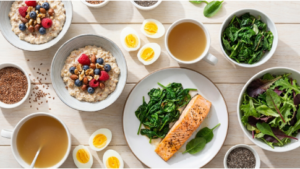
There is also a quieter, more existential layer to postpartum emotion that deserves naming. Becoming a mother reshapes your identity. The woman you were before is still in there, but she is now also someone’s mother, and integrating those selves is real, ongoing work. Many women find that this season calls them toward reflection, journaling, meditation, gentle spiritual practices, anything that helps them check in with who they are becoming. Some lean on community and conversation. Some find meaning in reflective tools that prompt self-inquiry; a number of new mothers, for instance, enjoy pairing their practical health tracking with a more contemplative companion like Raka Ai, an AI tarot and astrology app that some use simply as a structured prompt for self-reflection and intention-setting during a season of profound change. There is no single right way to tend to your inner life, but tending to it matters. Your emotional recovery is as real as your physical one, and it deserves the same patience and care.
Why Tracking Your Cycle After Baby Truly Matters
By now a theme has emerged again and again: in the postpartum season, attention turns confusion into clarity. That is exactly why tracking your cycle after baby is one of the most genuinely useful things you can do for yourself. It is not about obsession or perfectionism. It is about knowing your own body during a time when your body is changing faster than almost any other point in your adult life. Let’s lay out concretely why it matters.
- Re-learning your unique cycle. Your pre-baby cycle, even if you knew it well, may not be your post-baby cycle. The length, the symptoms, the flow, the rhythm, all of it may have shifted. Tracking lets you build a fresh, accurate picture of your new normal rather than assuming the old rules still apply. Over a few months, the irregular early postpartum cycles begin to reveal a pattern, and you are the one who gets to see it emerge.
- Knowing if and when you are fertile again. As we covered, fertility can return silently, before your first period. Tracking the signs of returning ovulation, changes in cervical mucus, shifts in basal body temperature, the reappearance of premenstrual symptoms, gives you a window into whether your fertility is waking back up. Whether you are trying to avoid pregnancy or hoping to conceive again, this knowledge is power. It is the difference between being surprised by your body and being in conversation with it.
- Spacing your pregnancies intentionally. Many families have thoughts about how far apart they want their children, for their own health, finances, energy, and family rhythm. Health bodies generally encourage giving the body adequate time to recover between pregnancies. Tracking your cycle, paired with appropriate contraception guidance from your provider, supports whatever spacing plan is right for your family, by keeping you informed about your fertility status rather than leaving it to chance.
- Spotting potential problems early. Tracking is also a quiet early-warning system. Cycles that are extremely irregular for a very long time, unusually heavy bleeding, bleeding that returns in concerning patterns, periods accompanied by severe pain, or other changes that feel wrong to you, these are all things worth discussing with your provider. When you have a record, you can give your doctor concrete information (“my cycles have been X days apart, my flow has been like this, here are the symptoms I logged”) instead of vague impressions. That makes appointments more productive and helps your provider help you.
- Reconnecting with your body. There is something deeper here, too. Pregnancy and birth can leave a woman feeling slightly estranged from a body that did extraordinary, sometimes overwhelming things. Gently tracking your cycle is a way of getting reacquainted, of saying, “I am paying attention to you again.” For many women, that act of attention is grounding and even healing.
In an earlier era, tracking meant a paper calendar and a lot of guesswork. Today, it can be far gentler and far smarter, which is where modern cycle apps come in. Among the most thoughtful options designed specifically with seasons like this in mind is the Period Tracker App from Vyve, and it is worth looking at how a tool built for this exact moment can support you.
A Tool Built for This Season: How Vyve Supports Your Returning Cycle
Postpartum is the hardest possible time to track your cycle the old-fashioned way. Your cycle is irregular by definition, your sleep is shredded, and your mental bandwidth is fully spoken for by a tiny human. What you need is not a rigid app that assumes a tidy twenty-eight-day cycle and gets confused the moment your body does something unexpected. You need something that meets you where you actually are, which is messy, changing, and unpredictable. This is precisely the gap the Vyve app was designed to fill.
Here is how Vyve’s features map onto the realities of the postpartum season.
AI predictions that re-learn your returning cycle. This is the standout. Many cycle apps break down when faced with the chaos of a returning postpartum cycle, because they are built on the assumption of regularity. Vyve’s approach is different: its AI is designed to learn your patterns and adapt as they change. So as your cycle slowly comes back online, irregular at first, then gradually settling, the app re-learns alongside you rather than forcing your body into a template it does not fit yet. Instead of being told you are “late” against some generic average, you get predictions that evolve with your actual data. For a body that is in active recalibration, that adaptability is exactly what you want.
Symptom and mood tracking. As we discussed at length, the postpartum cycle is not just about bleeding, it is about mood swings, premenstrual emotional shifts, cramps, breast tenderness, energy dips, and the whole constellation of how you feel. Vyve lets you log symptoms and mood right alongside your cycle, so those invisible patterns become visible. Over time you can see, in plain view, that your low days cluster before your period, or that your energy reliably returns at a certain point in your cycle. That is the kind of self-knowledge that turns a hard season into a navigable one. The mood tracking in particular tends to resonate with new mothers, because it validates that the emotional weather is real and connected to something, not just “in your head.”
The AI Cycle Coach. Perhaps the most reassuring feature for a new mother awake at 3 a.m. wondering “Is this normal?” is having something to ask. Vyve’s AI Cycle Coach is built to answer questions about your cycle in plain, supportive language, helping you make sense of what you are experiencing without spiraling down an alarming internet rabbit hole. It is not a replacement for your doctor, and it should not be treated as one, but it can be a calm, knowledgeable first stop that helps you understand your body and figure out when something is genuinely worth raising with your provider. In a season full of questions, having a thoughtful place to ask them is genuinely comforting.
Cycle-synced Food and Nutrition for postpartum recovery. Vyve also includes a Food and Nutrition feature that connects what you eat to where you are in your cycle, which is especially meaningful postpartum, a time when your body is recovering, rebuilding, and (if you are nursing) producing milk. Gentle, cycle-aware nutrition guidance can support your energy and recovery in a season when caring for yourself often falls to the bottom of the list. We will talk more about postpartum nutrition generally in the next section, but having it integrated into the same app you use to track your cycle makes it far easier to actually act on.
Privacy-first design. This one matters more than ever for intimate health data. Your cycle, your fertility, your moods, this is some of the most personal information about you that exists, and you deserve to know it is treated with care. Vyve is built with a privacy-first philosophy, designed so that your sensitive reproductive health data is handled respectfully rather than treated as a commodity. For many women, especially in 2026’s climate of heightened awareness around digital health privacy, that peace of mind is not a nice-to-have; it is essential. You can read more about the philosophy behind the product at vyvecare, which lays out how the whole ecosystem is built around supporting women through real life stages like this one.
What ties all of this together is intention. The Vyve app was not designed as a generic tracker that happens to also work postpartum; it was designed with the understanding that a woman’s cycle moves through distinct seasons, and that the postpartum return is one of the most tender and important of them. If you want to explore it, the Period Tracker App is available to download, and it pairs naturally with the broader resources at vyvecare. The goal of any good tool here is the same as the goal of this article: to help you feel informed, supported, and at home in your own body again.
Postpartum Recovery and Nutrition: Feeding the Body That Made a Person
Your menstrual cycle does not return in a vacuum. It returns within the context of a whole body that is recovering from pregnancy and birth, and (often) producing milk for a growing baby. How you nourish and care for that body influences not just your energy and mood, but the hormonal systems that govern your cycle’s return. So let’s talk, in general terms, about postpartum recovery and nutrition, with the standing reminder that a registered dietitian, your provider, or a lactation consultant can tailor advice to you.
Recovery is not a week, it is a season. Western culture often rushes new mothers to “bounce back,” but many traditional cultures wisely set aside an extended period, often around forty days, sometimes called the fourth trimester, for the mother to rest, be cared for, and heal. Your body underwent something enormous. Permitting yourself to recover slowly, to rest, to accept help, to lower your expectations of everything else, is not laziness; it is part of healing, and it supports the hormonal recovery that your cycle depends on. Chronic exhaustion and stress can themselves delay and disrupt the return of a healthy cycle.
General nutrition principles for postpartum. While individual needs vary, a few broad themes apply to most recovering mothers:
- Protein supports tissue repair and recovery. Including protein-rich foods, eggs, beans and lentils, poultry, fish, dairy or fortified alternatives, nuts and seeds, gives your body building blocks for healing.
- Iron is especially worth attention because childbirth involves blood loss, and many women are somewhat depleted afterward. Iron-rich foods (lean red meat, beans, lentils, leafy greens, fortified grains) and, if your provider recommends, continued supplementation, support your energy and help replenish stores. Low iron can leave you exhausted in ways that compound new-parent tiredness.
- Healthy fats, including omega-3 sources like fatty fish, walnuts, and flaxseed, support recovery and, for nursing mothers, are valuable in breast milk.
- Complex carbohydrates and fiber, whole grains, fruits, and vegetables, provide steady energy and support digestion, which can be sluggish postpartum.
- Calcium and vitamin D support bone health, which is especially relevant for breastfeeding mothers.
- Hydration is genuinely important, particularly if you are nursing, since milk production increases your fluid needs. Keeping water within reach, especially at the spot where you usually feed your baby, is a small habit that pays off.
Don’t aim for perfection, aim for nourishment. Realistically, no new parent is preparing elaborate balanced meals around the clock. The goal is not a flawless diet; it is consistent, gentle nourishment. Easy, nutrient-dense snacks, hard-boiled eggs, yogurt, nut butter on whole grain toast, fruit, trail mix, that you can eat one-handed while holding a baby are worth their weight in gold. Batch-cooked meals, freezer stashes prepared before birth, and accepting food from anyone who offers are all legitimate strategies.
The cycle connection. This is where cycle-aware nutrition becomes interesting. As your cycle returns, your body’s needs shift slightly across its phases, for example, replenishing iron is especially relevant around and after menstruation, when you have lost some blood. A tool that connects nutrition to your cycle, like the Food and Nutrition feature in the Vyve app, can gently nudge you toward what your body needs at a given point, taking one more thing off your overloaded mental plate. Whether you use an app or simply keep these principles in the back of your mind, the underlying truth is the same: feeding yourself well is part of feeding your recovery, and your recovery is part of welcoming your cycle back in a healthy way.
If you want broader, ongoing reading on cycle health and postpartum wellbeing as you settle into this new normal, the resources collected at best period tracker are a thoughtful place to keep learning, with plenty of approachable articles on cycles, symptoms, and what is and isn’t normal across different life stages.
Contraception While Breastfeeding: General Considerations
Given everything we have covered, especially the fact that fertility can return before your first period, contraception is a topic most postpartum couples need to think about, often sooner than they expect. This section is intentionally general; the right choice for you depends on your health history, your feeding plan, and your preferences, and it is a conversation to have with your provider. But understanding the broad landscape helps you walk into that conversation informed.
The breastfeeding wrinkle. The main reason contraception postpartum requires a little extra thought is that some methods can interact with breastfeeding. In particular, methods that contain estrogen (such as combined hormonal pills, patches, or rings) are sometimes approached with more caution in breastfeeding mothers, because estrogen can, in some cases, affect milk supply, especially in the earlier weeks before nursing is well established. This is exactly the kind of nuance your provider will weigh with you.
Categories of options, in general terms. Without prescribing anything, here is the lay of the land that your provider may discuss:
- Barrier methods (such as condoms) do not involve hormones at all and therefore do not affect milk supply, which makes them a straightforward option many couples use postpartum, sometimes alongside other approaches.
- Progestin-only methods (often called the “mini-pill,” along with certain implants and injections) are frequently discussed for breastfeeding mothers because, lacking estrogen, they are generally considered less likely to affect milk supply. Many nursing mothers and their providers find these a good fit.
- Intrauterine devices (IUDs), both hormonal and non-hormonal (copper) versions, are long-acting options that many women choose postpartum. The hormonal types are progestin-based, and the copper type is hormone-free. Timing of placement is something your provider will guide.
- The lactational amenorrhea method (LAM), discussed earlier, is a natural option that can be effective temporarily and only when its strict conditions are all met (baby under six months, exclusive on-demand breastfeeding day and night, and no return of your period). Because those conditions are easy to slip out of, many families use it as a bridge while arranging a longer-term method, rather than as a long-term plan.
- Fertility awareness-based methods rely on tracking your body’s signs to identify fertile windows. These are more challenging postpartum precisely because cycles are irregular and ovulation can be hard to predict while breastfeeding, so they generally require careful learning and often professional guidance to use reliably in this season.
The bottom line: there is no one-size-fits-all answer, and there is genuinely good news in that, you have options, and one of them is likely to fit your body and your feeding plan well. The key actions are to think about it early (remembering that fertility can return before your period), and to have an honest conversation with your provider, ideally at or before your postpartum check-up. Tracking your cycle through this period complements whatever method you choose, by keeping you tuned in to your own fertility signals. None of this replaces professional medical advice; it is simply a map of the territory so you can ask better questions.
When to Call Your Doctor
Most of what we have described, the wide range of return times, the irregular early cycles, the heavier first periods, the emotional ups and downs, falls within the broad band of normal. But part of caring for yourself is knowing when something deserves a professional’s attention. This is general information, not medical advice, and you should never hesitate to reach out to your provider whenever something worries you, even if it is not on this list. Trust your instincts; you know your body.
That said, here are some situations that generally warrant a call to your doctor or midwife:
Bleeding concerns: – Very heavy bleeding, such as soaking through a pad every hour for several hours in a row, or passing large clots, especially in the postpartum recovery period. Heavy postpartum hemorrhage can be serious and needs prompt attention. – Bleeding that had tapered off and then suddenly becomes heavy and bright red again in the early weeks, which can sometimes signal a problem. – Foul-smelling discharge, which along with fever can suggest infection.
Signs of infection or serious illness: – Fever, chills, or feeling generally unwell in the postpartum period. – Severe abdominal or pelvic pain beyond normal cramping. – A red, hot, painful, swollen area on the breast accompanied by fever or flu-like symptoms, which can indicate mastitis and often needs treatment.
Cycle concerns once things have settled: – Cycles that remain extremely irregular for a prolonged time beyond the expected early recalibration, particularly if you are not breastfeeding. – No return of your period many months after stopping breastfeeding, or no period for a long stretch if you were never breastfeeding, which is worth investigating. – Bleeding between periods, unusually painful periods, or any change that feels significantly wrong to you.
Emotional and mental health concerns (these are urgent and important): – Feelings of sadness, emptiness, hopelessness, or severe anxiety that persist beyond two weeks or that interfere with daily life. – Difficulty bonding with your baby, withdrawing from loved ones, or feeling detached. – Intrusive, frightening, or distressing thoughts, including any thoughts of harming yourself or your baby. Please seek help immediately, contact your provider, a mental health professional, or an emergency line in your area. You are not alone, this is treatable, and reaching out is the right thing to do.
A note on the postpartum check-up itself: the visit your provider schedules in the weeks after birth (often around six weeks, though many providers now offer earlier and ongoing check-ins) is an ideal time to raise any cycle, recovery, contraception, or mood questions. Come with your notes, this is another place where having tracked your symptoms pays off, and do not save your questions for “later.” This visit exists for you.
Frequently Asked Questions
- How soon after giving birth can my period return? For some women, especially those not breastfeeding, it can return as early as around six weeks postpartum. For exclusively breastfeeding mothers, it may not return for many months, sometimes not until weaning. The normal range is very wide, so an early return and a much later return can both be completely healthy.
- Is the bleeding right after birth my period? No. The bleeding in the first days and weeks after birth is called lochia, and it is part of your uterus healing and clearing out after pregnancy, not a menstrual period. Lochia typically changes from red to pink to whitish over several weeks. Your true period comes later, on its own individual timeline.
- Does breastfeeding really delay my period? Yes, often significantly. Frequent breastfeeding raises the hormone prolactin, which suppresses ovulation. This is called lactational amenorrhea. The more often and consistently you nurse, including at night, the stronger the effect tends to be. This is why exclusively breastfeeding mothers usually wait much longer for their periods than formula-feeding mothers.
- Can I get pregnant before my first postpartum period? Yes, absolutely, and this surprises many people. Ovulation happens about two weeks before a period, so you can release a fertile egg before you ever see your first period return. This means you can conceive without any “warning” period. If you want to avoid pregnancy, do not rely on the absence of your period; talk to your provider about contraception proactively.
- Why is my first postpartum period so heavy? A heavier first period is common as your body recalibrates after pregnancy and birth. There may also be more clotting in that first cycle. This usually settles down over the following months. However, if you are soaking through a pad every hour for several hours or passing very large clots, contact your provider.
- My periods are really irregular since having my baby. Is that normal? In the early months after your cycle returns, irregularity is very common and usually normal as your hormonal system re-establishes its rhythm, especially if you are breastfeeding. Most women find their cycles gradually regularize over a few months. If extreme irregularity continues for a long time, particularly if you are not breastfeeding, mention it to your provider.
- I’m exclusively breastfeeding and it’s been months with no period. Should I worry? Generally, no. Exclusive, frequent breastfeeding commonly suppresses periods for many months, and a return only after you begin weaning or your baby starts nursing less is typical. That said, remember you can still ovulate before your period returns, so this is not a reliable sign that you cannot conceive. If you have any concerns, your provider can reassure you.
- Will my period affect my breast milk supply? Some breastfeeding mothers notice a temporary dip in supply or some breast tenderness around the time of their period, related to hormonal shifts. This is usually temporary and resolves as the cycle passes. Staying well hydrated and nursing frequently can help. If supply concerns persist, a lactation consultant is a great resource.
- Can I use breastfeeding as birth control? Breastfeeding can offer natural contraceptive effect through the lactational amenorrhea method (LAM), but only when strict conditions are all met at once: your baby is under six months, you are exclusively breastfeeding on demand day and night, and your period has not yet returned. Once any of those changes, the protection weakens. Because the conditions are easy to slip out of, many families use it as a temporary bridge and discuss a longer-term method with their provider.
- When will my cycle go back to normal? It varies. Once periods begin returning, many women find their cycles regularize over a few months. Your “new normal” may resemble your old cycle or may be somewhat different, in length, flow, or symptoms. Tracking helps you see your new pattern emerge clearly. Apps like the Vyve Period Tracker App are designed to learn your returning cycle as it settles.
- Why do I feel so emotional, and is it related to my cycle? Postpartum brings a dramatic hormonal drop after birth, which contributes to the common “baby blues” in the early weeks. As your cycle returns, monthly hormone fluctuations can bring premenstrual mood shifts too. Tracking your mood alongside your cycle often reveals patterns. However, if low mood, severe anxiety, or distressing thoughts persist beyond two weeks or interfere with your life, please reach out for support; postpartum depression and anxiety are common and very treatable.
- What can I eat to support my recovery and cycle? Focus on gentle, consistent nourishment rather than perfection: protein for tissue repair, iron to replenish what was lost during birth, healthy fats, complex carbohydrates, fiber, calcium, vitamin D, and plenty of fluids (especially if nursing). Easy one-handed snacks are your friend. Cycle-aware nutrition tools, like the Food and Nutrition feature in the Vyve app, can help match your eating to your body’s changing needs. A dietitian or your provider can personalize this further.
- Why should I bother tracking my cycle after having a baby? Tracking helps you re-learn your new cycle, recognize if and when your fertility returns (which can happen before your first period), plan or space future pregnancies, and spot potential problems early so you can give your doctor useful information. It is also a gentle way to reconnect with a body that has been through a lot. You can learn more about cycle health at best period tracker.
- Which app is best for tracking a postpartum cycle? You want an app that adapts to irregularity rather than assuming a perfect cycle. The Vyve app was built with this in mind, its AI re-learns your returning cycle, it offers symptom and mood tracking, an AI Cycle Coach for your questions, cycle-synced nutrition guidance, and a privacy-first design. You can explore it via the Period Tracker App listing or read about the broader approach at vyvecare. For general ongoing reading, best period tracker is also a helpful resource.
- When should I definitely call my doctor? Call for very heavy bleeding (soaking a pad an hour for several hours), foul-smelling discharge, fever, severe pain, signs of mastitis, cycles that stay extremely irregular for a long time (especially if not breastfeeding), or any change that feels wrong to you. For mental health, reach out right away if sadness or anxiety persists beyond two weeks, you struggle to bond with your baby, or you have any frightening or intrusive thoughts. Trust your instincts, this is general information, not medical advice, and your provider is always the right call when in doubt.
- Is it normal for my periods to feel different than before pregnancy? Yes. Many women find their postpartum periods differ in flow, cramping, length, or premenstrual symptoms. For some, periods become heavier or more uncomfortable; for others, they actually become easier. A changed but stable pattern is common. Tracking helps you understand your new baseline so you can tell what is normal for you.
- I feel like I’ve lost touch with who I am since becoming a mom. Is that part of this? Very much so, though it is less talked about. New motherhood reshapes identity, and many women find this season calls for reflection and self-reconnection. Alongside practical health tracking, some mothers lean on journaling, meditation, community, or reflective tools, a number enjoy a contemplative companion like Raka Ai as a structured prompt for self-reflection during this time of change. There is no single right way; the point is simply to tend to your inner life as carefully as your physical recovery.
A happy healthy mother smiling at home

Coming Home to Your Body Again
If you take nothing else from this guide, take this: there is no single timeline you are supposed to match, and there is nothing wrong with you if your experience looks different from your sister’s, your best friend’s, or the stranger’s online. The return of your cycle after baby is one of the most individual things your body will ever do, governed by your hormones, your feeding journey, your sleep, your stress, and the simple fact that you are gloriously, specifically you.
What you can do, in the midst of all that beautiful uncertainty, is pay attention. You can learn the difference between lochia and a real period. You can understand that breastfeeding may keep your cycle away for a while, and that fertility can quietly return before any period announces itself. You can expect those first cycles to be a little wild before they settle. You can honor the emotional weather as real and connected to the same hormones steering everything else. And you can give your recovering body the rest, the nourishment, and the gentleness it has earned by doing something extraordinary.
Tracking is how you turn that attention into clarity. It is how a confusing season becomes a knowable one, how mysterious bad days become anticipatable ones, and how you slowly come home to a body that may feel newly unfamiliar. A tool built for exactly this moment can carry some of that load for you, an app whose AI re-learns your returning cycle, that lets you log symptoms and mood, that offers an AI Cycle Coach to answer the 3 a.m. questions, that connects nutrition to your recovery, and that treats your most private information with the privacy it deserves. If that sounds like what you need, the Vyve Period Tracker App was made for this season, and you can learn more about the whole supportive ecosystem behind it at vyvecare. For ongoing, approachable reading on cycles and postpartum health, keep best period tracker bookmarked, too. And if your heart is also asking deeper questions about who you are becoming, there is no shame in pairing the practical with the reflective; some mothers find a quiet companion like Raka Ai a gentle prompt for the inner work this season invites.
You have just done one of the hardest, most miraculous things a human body can do. Be patient with the body that did it. Pay attention to it, nourish it, and trust that, in its own time and its own way, your cycle will find you again. You are not behind. You are not broken. You are exactly where you are supposed to be, and you are doing beautifully.
This article is for general educational purposes only and does not constitute medical advice. Always consult your doctor, midwife, or another qualified healthcare provider with questions about your individual health, recovery, contraception, or any concerns about you or your baby.