


A baby’s first year is a major milestone when they start exploring new tastes, textures, and eating habits. At one year old, children become more active and curious, which increases their nutritional needs. Providing the right balance of proteins, carbohydrates, healthy fats, vitamins, and minerals helps support their physical growth, brain development, immunity, and energy levels. Choosing healthy food for 1 year old children is important because their digestive system is still developing, and they need foods that are nutritious, safe, and easy to digest. A well-planned diet can help establish healthy eating habits that may continue throughout childhood. Parents should focus on offering a variety of fresh foods instead of relying on processed snacks or sugary items.
Importance of Nutrition for a 1 Year Old Baby
At one year of age, babies are transitioning from a milk-focused diet to eating more solid foods. Although breast milk or formula may still be part of their routine, solid foods become the main source of essential nutrients. A balanced diet provides the energy required for crawling, walking, playing, and learning new skills.
The right nutrition also supports healthy brain development. Nutrients like iron, omega-3 fatty acids, calcium, and vitamins play an important role in building strong bones, improving concentration, and strengthening the immune system. When parents introduce different types of foods early, children become familiar with various flavors and textures, reducing the chances of picky eating habits later.
Including different food groups in daily meals ensures that children receive complete nutrition. A combination of fruits, vegetables, grains, dairy products, and protein sources creates a balanced meal plan suitable for a growing child.
Essential Nutrients Needed by a 1 Year Old
A one-year-old child requires several important nutrients for healthy growth. Each nutrient has a specific role in supporting their development and overall health.
Protein is necessary for muscle growth and tissue repair. Foods such as eggs, lentils, beans, chicken, fish, yogurt, and paneer are good protein sources. Healthy fats from foods like avocado, nuts, seeds, and dairy products support brain development.
Calcium and vitamin D are important for strong bones and teeth. Milk, yogurt, cheese, and fortified foods can help meet calcium requirements. Iron is another essential nutrient because it supports blood production and brain function. Green leafy vegetables, lentils, beans, and iron-fortified cereals are beneficial choices.
Fiber from fruits, vegetables, and whole grains helps maintain healthy digestion and prevents constipation. Vitamins and minerals from colorful fruits and vegetables strengthen immunity and support overall development.
Best Healthy Foods for a 1 Year Old Baby
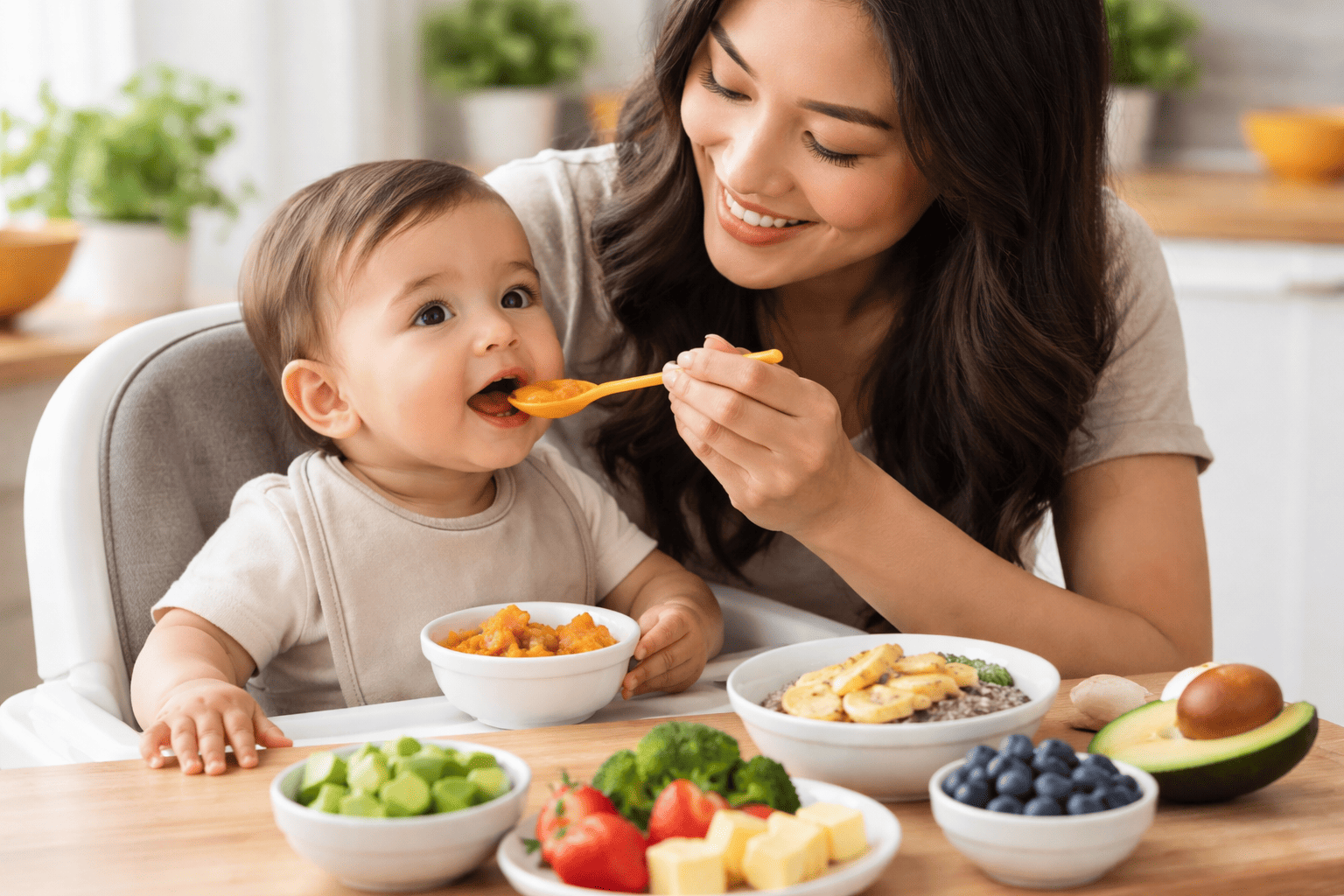
Choosing the right foods for a one-year-old does not have to be complicated. Simple homemade meals made with fresh ingredients can provide excellent nutrition. Parents should include different food groups throughout the day to create a balanced eating routine.
Soft fruits like bananas, apples, mangoes, pears, and papaya are excellent choices because they provide vitamins and natural energy. Vegetables such as carrots, sweet potatoes, spinach, peas, and broccoli offer important nutrients and can be cooked until soft.
Whole grains like oats, brown rice, whole wheat bread, and millet provide long-lasting energy. Protein-rich foods including eggs, lentils, beans, chicken, fish, and dairy products help with growth and development.
When planning healthy food for 1 year old children, parents should focus on variety, freshness, and age-appropriate textures. Foods should be prepared in a way that makes them easy for babies to chew and digest.
Healthy Breakfast Ideas for a 1 Year Old
Breakfast is an important meal because it provides energy after a night of sleep. A nutritious breakfast can help children stay active and support their daily activities.
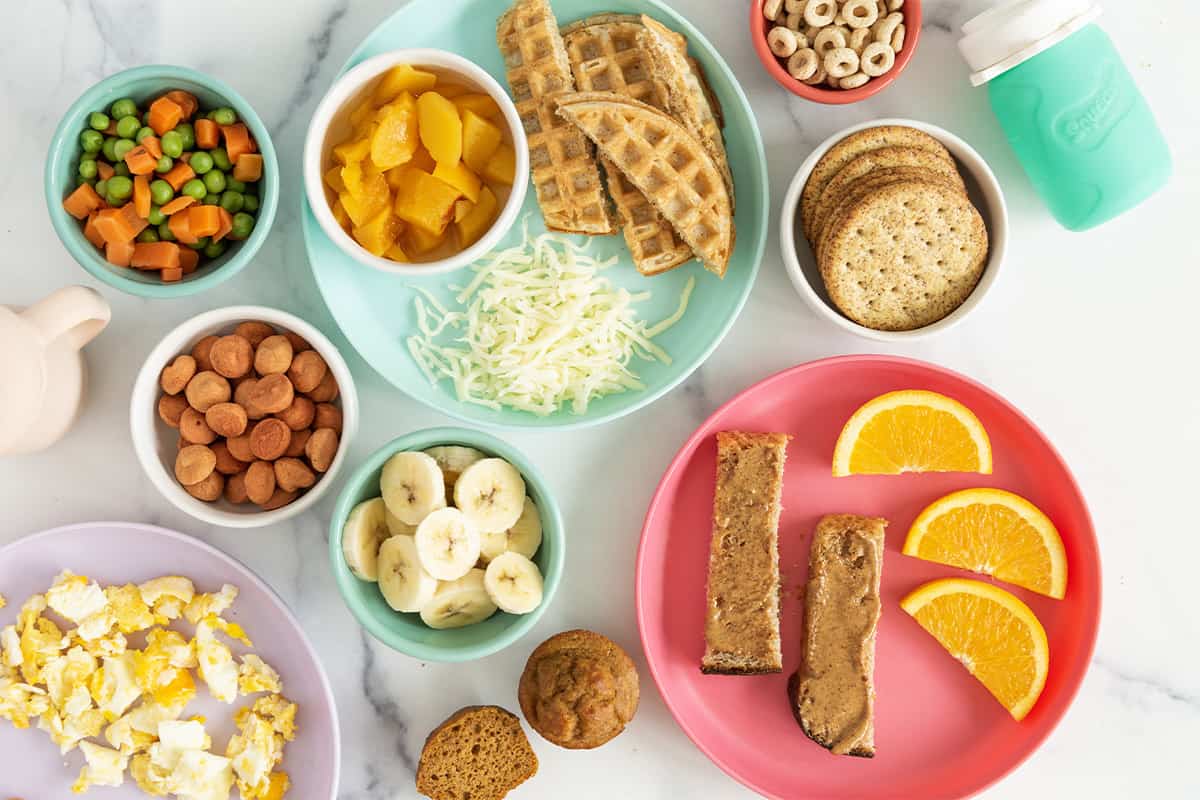
Some healthy breakfast options include oatmeal with fruits, vegetable pancakes, scrambled eggs, soft idli, homemade porridge, and whole wheat toast with healthy spreads. Adding fruits or dairy products can increase the nutritional value of the meal.
Parents should avoid sugary cereals, packaged breakfast foods, and artificial drinks because they often contain unnecessary additives and low nutritional value. Instead, homemade meals prepared with natural ingredients are better choices.
A balanced breakfast containing carbohydrates, protein, and healthy fats helps maintain energy levels and supports growth. Introducing different breakfast options also allows children to develop a preference for nutritious foods.
Nutritious Lunch and Dinner Options
Lunch and dinner should include a combination of different food groups to provide complete nutrition. A simple meal with vegetables, grains, and protein can fulfill many nutritional needs of a growing child.
Rice with vegetables and lentils, soft chapati with vegetable curry, khichdi with ghee, vegetable pulao, and homemade soups are excellent meal choices. Parents can add yogurt or paneer to increase protein and calcium intake.
Food texture is also important at this stage. Meals should be soft and easy to chew because children are still developing their chewing abilities. Avoid making foods too spicy, salty, or oily.
A regular meal schedule helps children understand hunger and fullness signals. Offering balanced meals at consistent times creates healthy eating patterns.
Healthy Snacks for a One Year Old
Snacks are useful for providing additional energy between meals. However, choosing nutritious snacks is important because unhealthy snacks can affect eating habits.
Good snack options include fresh fruit pieces, yogurt, homemade muffins, boiled vegetables, cheese cubes, roasted soft foods, and nut powders mixed into suitable foods. These options provide important nutrients without excessive sugar or unhealthy fats.
Parents should avoid giving candies, chips, sugary drinks, and processed snacks regularly. These foods may fill a child’s stomach but do not provide the nutrients required for growth.
Including healthy food for 1 year old babies during snack times can support steady energy levels and ensure they receive enough nutrients throughout the day.
Foods to Avoid for a 1 Year Old Baby
While introducing new foods, parents should also know which foods may not be suitable for young children. Some foods can increase choking risks or may not provide healthy nutrition.
Avoid giving whole nuts, hard candies, popcorn, large pieces of raw vegetables, and foods that are difficult to chew. Nuts should be offered in powdered or paste form when appropriate.
Processed foods containing high amounts of sugar, salt, and artificial ingredients should be limited. Soft drinks, packaged juices, and fast foods are not suitable choices for toddlers.
Honey should also be avoided before one year of age, but parents should still discuss food choices with healthcare professionals if they have concerns. Safe preparation and proper food texture are important for preventing eating-related problems.
Tips for Creating Healthy Eating Habits
Developing good eating habits early can influence a child’s relationship with food in the future. Parents should create a positive mealtime environment and encourage children to try different foods without pressure.
Allowing children to explore food, eat independently, and experience different textures can improve their confidence. It is normal for toddlers to refuse certain foods sometimes, so parents can offer those foods again after some time.
Eating together as a family can encourage children to copy healthy eating behaviors. Parents should also avoid distractions like television during meals and focus on creating a calm eating routine.
A balanced approach to meals helps children enjoy food while receiving proper nutrition. Consistently offering healthy food for 1 year old babies can support better growth and long-term wellness.
Sample Daily Meal Plan for a 1 Year Old
A simple daily meal routine can include:
- Morning: Milk or breast milk with a nutritious breakfast
- Mid-morning: Fresh fruit or yogurt
- Lunch: Rice or chapati with vegetables and protein source
- Evening snack: Homemade healthy snack
- Dinner: Soft balanced meal with grains, vegetables, and protein
The exact amount of food varies from child to child. Parents should follow their baby’s hunger signals and avoid forcing them to eat. Some days children may eat more, while on other days they may eat less, which is normal during toddler development.
Conclusion
Providing the right nutrition during the first years of life helps children develop strong bodies, healthy brains, and better immunity. A balanced combination of fruits, vegetables, grains, proteins, and dairy products ensures that toddlers receive essential nutrients for growth.
Choosing healthy food for 1 year old children means focusing on fresh, homemade, and nutrient-rich meals while avoiding excessive processed foods. Every child has different nutritional needs, so parents should observe eating patterns and consult healthcare professionals whenever necessary. Building healthy eating habits early creates a strong foundation for a child’s future health and development.
Read More:- Is Indian Food Healthy? Benefits and Nutrition Facts